


Community over COVID-19

Blok Studio will be closed for the month of April in order to comply with Gov. Ducey’s shelter-in-place order. We’re taking these measures to help protect our community, both our clients and our employees. Nothing is more important to us. Full refunds will be given to all existing appointments. We know that the Phoenix creative community is resilient, and we are looking forward to serving you again as soon as it’s deemed safe.
It’s through these unfortunate times that community is vital and supporting each other is even more vital. We’ve listed a few helpful links below that explain the recently approved CARES Act. This bill gives us small businesses and freelancers more resources to survive through this uncertain time. Things such as freelancers, gig workers, and contractors being eligible for unemployment benefits, forgivable business loans, and payroll tax deferral. Please read through the information below and seek professional counsel when necessary.


AROUND THE BLOK. VOL. 12 - Brandon Boetto

Images by Thomas Ingersoll
We appreciate art and creativity across any industry. When we discovered Brandon and his passion for architecture & concrete design, we knew he’d be the next artist to feature on Around the Blok. Brandon Boetto is the owner of SlabHaus, a high-end, artisan concrete studio located in downtown Phoenix. His portfolio and client base speaks for itself, and we took pleasure seeing him in action.
Tell us about yourself?
I am a third generation Arizona native. I grew up in Gilbert, Arizona where I found my passion for creating at a young age. I was a full-time computer nerd growing up. I was building websites at 13 years old and always wanted to be a 3D animation artist. This passion led me to a college that taught animation, but luckily I was quick to learn that you couldn’t find a job (at the time) doing that for a living. I switched my direction to graphic design, and that was my direction for 15 years. I have always had a strong bond with good design. Whether it be buildings/cars/ print, I knew what good design looked like and how it made me feel, and I always wanted to create that feeling for other people.


Why do you do what you do?
My drive to create was instilled at a young age. I was always fascinated with gathering materials and crafting something that had a purpose/function. My tinkering started with forts as a child and led to race cars in my late teens then onto architecture & concrete design in my late 20’s. My creations these days are fuel to live a happy life. I am so excited to go into the shop every morning with an idea and figure out how that journey will lead to a finished product that will be around longer than I. The process is the passion, not the product.


Photo Credit: Baxter Imaging
What benefit does art provide to society?
I think art evokes emotion. An emotionless society would not produce breakthroughs in technology; there would be no love, we would walking flesh bags with no purpose. When I say art, I don’t speak of it in the traditional sense. I don’t mean staring at a painting and trying to feel something about it. Art is in the eye of the beholder. Anything can be art, and I think this has been seen recently with popular contemporary artist. Buildings can be art, cars can be art, clothing can be art, performance can be art. The amount of interaction with art on a daily basis is vast.

What’s your advice to others chasing their dream?
Dream big. Keep a mental picture in your head of the life you want to live and tell it to as many people as you know. I think developing a vast network of friends, family, entrepreneurs, etc. will help you in more ways than you realize at first. Find your passion first! This can take years, and there is no rush. Find what truly makes you happy to wake up every morning and make that your whole intent. Give it 100%, it will be extremely tough, but if you have that vast base of people around you to uplift you when you are down then you will get through it. It will always be tough, and there will be waves of success and failure. Don’t ever let failure stop you, learn from that and quickly push it to the side.

What is your biggest inspiration and why?
Some of my biggest inspirations have been my friends. I get so excited to see the people around me living their best life doing what they want when they want. The talented people that I chose to surround myself with also give me life. I often have coffee with creatives and business owners on the weekends to hear their stories and often I walk away so inspired that it helps fuel my drive for creation.


Continuing to Live, Learn, and Light

As Blok Studio evolves and grows with our community, our goal is to provide a balance of inspiration and information. To support this purpose, the Blok blog will now be organized by the three words that are at the heart of who we are and what we stand for: live, learn, light.
Live is the Blok lifestyle. We’ll bring you curated playlists, travel highlights, creativity, imagination, and continue our artist profiles in our Around the Blok series.
Learn is founded on our drive to help and teach others that have a story to tell. We’ll share our industry knowledge, gear reviews and how-to’s, and Blok EDU classes. We do this because we believe in community over competition.
Light is the catalyst to life. It’s technical yet abstract, tangible yet elusive. We’ll investigate light in all its beautiful forms. We’ll share guides on lighting equipment and set-ups, cover essays on the philosophy of light, and show all the badass lighting inspiration we can find. Nothing electrifies us more than light.
Join the Blok community and stay tuned for our new content!

Four Things to Consider When Building Your Light Setup

Mood
Light direction, quality, and color help shape the story and create the mood of your images. Having a solid understanding of the concept and mood of your shoot will help you make better decisions on which light modifiers to use. For example, if the concept calls for soft lighting, then you would know to consider a softbox and if it's hard lighting then maybe a beauty dish or reflector would be a better choice for the job.
Ambient Light
The proper balance of ambient and artificial light can make a beautiful portrait. When shooting on-location, it's essential to have a good balance between the two. Camera shutter speed controls ambient light, a slower speed allows for more ambient, and a faster speed deduces it. It primarily depends on the concept and mood you want to portray.
Lighting Style
Wheather you're using strobes to photograph people, products or places, there will always be a lighting style that is more flattering based on the characteristics of the subject. For example, broad lighting can be used to make narrow faces look fuller and short lighting is ideal for slimming the face out. Having a good understanding of the various lighting styles and knowing when to use them is vital to taking quality portraits.
Fill Light
Fill light can be used to brighten up shadows and make an image more interesting. If the shadows are too dark, try adding white foam core or a soft modified light source to the shadow side of the face to brighten them up. A white/silver reflector or soft modified light can also add beautiful catchlights in your subject's eyes, making a more interesting photo.
Join us in our LIGHTING 101 class to learn more about these concepts.
Three Lighting Kits To Consider.
Purchasing a lighting kit can be a daunting task, especially for your first kit ever. Many photographers have to consider the type of work and typical shooting scenarios that the kit would work best for. The overall cost for a lighting kit can be very expensive, but you can definitely find alternatives.
Photographer and director, Joey L gives an in-depth review of three lighting kits that can be used in the studio or on location. The review covers the brands Paul C. Buff, Profoto, and Broncolor. He also goes over the essential items in each kit.
This review is a great starting point for anyone looking to purchase or upgrade a current kit. Our Lighting 101 Class covers this topic in-depth. If you're interested in learning more go sign up!

Studio Lighting Gear Essentials

Learning to use studio strobes or any off-camera flash can be an overwhelming job. Understanding what type of gear is required can be just as confusing. If you're new to shooting with off-camera flash, we always recommend keeping things simple. In this article, we cover the essential tools you'll need to get started!
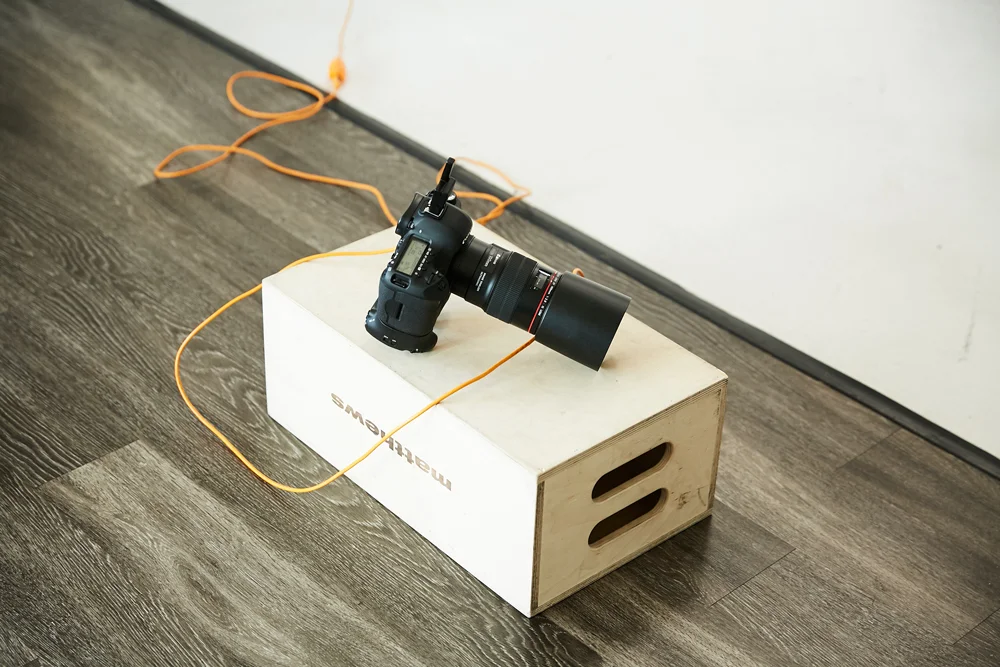
CAMERA AND LENS
We'll start with the bare minimum tools you'll need which are a camera and lens. Without these items, you won't get far on this journey. There are many different brands available, but the most critical feature your camera will need to have is manual mode. This option allows you to manually control the ISO, Aperture and Shutter Speed of your camera. Manual mode is typically a standard feature for most DSLR and mirrorless cameras. For the lens, we suggest a standard zoom lens as it provides excellent versatility in the studio. Your lens preference will undoubtedly change as your knowledge grows.
LIGHTING AND MODIFIERS
An off-camera light source such as a studio strobe or speed light is required to learn the technical aspects of studio lighting. A speed light is a portable flash that can be fired on the hot shoe of your camera or wirelessly, with the proper triggers. They tend to be less expensive than studio strobes and more portable. Studio strobes are larger and powered by AC power. They have to be plugged into the wall or a battery pack. They tend to be more powerful than speed lights. We use strobes here at Blok Studio, but either type will be sufficient to learn with. A light modifier isn't required but helps shape the light. If you're unfamiliar with light modifiers, you can read our previous post about it here.

LIGHT STANDS
Light stands are one of the most ignored studio elements, but with the proper stand, you will become more efficient when setting up your off-camera flash. Stand types vary from general purpose to c-stand, boom stand, rolling stand, and the list goes on. C-stands provide great flexibility and last a long time because they're built like a tank but aren't the most portable stands. If you're just starting out and on a budget, then a general purpose light stand will work just as well.
TRIGGERS
Wireless and wired are the two methods to trigger your off-camera flash. A transmitter (connects to camera's hot shoe) and receiver (connects to studio strobe or speed light) are both needed to fire your flash wirelessly so regardless of the brand, be sure you have those. If you're triggering your flash with the wired method, then a sync cable specific to your camera brand is required.
Our lighting 101 class covers this topic more in-depth. If you're interested in learning more go sign up!
What is your favorite light modifier?

As part of our recent series, we invited our community to answer the question, 'What is your favorite portrait lens'. We received so many insightful views that we are back with another question! This week we're asking, 'What is your favorite light modifier?’. Leave your favorites down below! Happy shooting!