


Your brand identity is holding you back.
Hi, Thomas Ingersoll here. I'm a commercial and advertising photographer in Phoenix, Arizona. I am taking over Blok's blog this week and want to share something that has changed how I get clients, and how clients perceive me.
This week I want to talk about the importance of being a brand and having a strong identity. Now, this may seem like a no-brainer, but it is commonly overlooked in our industry. In today's climate, it is not enough to be a good photographer. The days of just having a strong portfolio are dead. A photographer must be a brand, an experience if you will. Our market praises brands that create an experience, consistent in their identity, and easily assessable on all platforms. This will garner trust and reliability with your audience; they know what they will get when they come to you. It also conveys that you are willing to put the time in to represent yourself and what you want to share with the world. So where do you start? I will break down the crucial aspects of developing a robust unified identity.
- Start with your work. Align your work with your brand's identity, make sure they compliment each other. If you are a lifestyle photographer, things like your design, font, color, logo, and voice should convey that message. This will help establish your persona before your audience even begins to browse your work.
- Establish what market you are after. Are you pursuing retail, commercial, editorial, etc.? You will want to articulate on your platforms who you are and the type of work you do. I market myself as an advertising and commercial photographer. I make sure on all platforms that I state that. I also make sure my SEO practices relate to those terms.
- Show people who you are. You're a photographer; you should have a beautiful photo of yourself. Keep a consistent biopic across all your platforms.
- Logo. This is usually people's first impression of the type of work you do. Spend some time and make sure your logo represents yourself well.
- Develop a brand color. This will help support your logo and design. People will start to associate your brand with a color, look at companies like H&R Block, McDonald's, Coca-Cola, and Air BnB.
After establishing your brand identity, apply this across your platforms.
Website
First is your website. This is the staple of your identity. This is where you want to drive traffic to. All marketing attempts should funnel people to your site. Your website should be an experience for your audience, and make it a pleasant and memorable one. Your identity should sing through your site, and make it easy to navigate damnit.

Social Media
Use this free form of marketing to establish your voice, identity and accessibility. Have a unified bio pic. Market yourself to a specific audience. Drive people to your website.
Consider what you post, make sure it relates to what you're photography.
Instagram is great for a personality. Share your BTS, technical info, and your portfolio. Don't be afraid to some personal experiences here.

This is a great space to share links and stories. Be involved in communities. Keep personal stuff to a personal account.

Great to find a network of professionals. Share your stories.

Use this platform to share BTS and links. Almost a mix of Instagram and Facebook.

Business cards and mailers
Don't ignore the world that exists outside of the internet. Print is still a very crucial aspect of marketing and identity. I love using leave behinds and business cards for more professional settings. Make sure that the design of your cards, print portfolio, and leave behinds are all an extension of your brand.


Conclusion
Throughout my presence I remain consistent. My branded color is a deep red white. My style is minimal with a slight modern touch. All my platforms look the same so my audience knows its me. I state that I'm an advertising/commercial photographer. Implementing a strong brand into my business structure has helped elevate the type of clients I get.
Take a look and ask yourself if you are a strong brand.
Resources
Website - Squarespace
Business Cards and Mailers - Moo
Also be sure to check out Agency Access. They have tons of insightful info on their blog, as well as a team of professionals that can help develop your brand.

AROUND THE BLOK. VOL. 9 - Christoph Kaiser
Christoph is the founder of Kaiserworks, a Phoenix-based architecture and design studio. As the city continues its rapid paced growth, it's exciting to see his studio help shape the look of our town and surrounding area with projects such as Undefeated, Tempe Public Market Cafe, Welcome Diner, and Changing Hands Bookstore. It's even more inspiring to see the work he's doing revitalizing historic homes in our Garfield neighborhood, one of the oldest districts in Phoenix. We had a wonderful time with Christoph for this segment of Around the Blok and thrilled to have him as our next artist!

Tell us about yourself?
I am a Phoenix native with a passion for design, architecture, and place-making. I grew up spending my summers in southern Germany. The experience of growing up in two very different worlds made me recognize at an early age how radically our built and unbuilt environment can impact us. I’m an introvert and optimist by nature, and a believer in the redemption story. Whether in people, communities or buildings, I see potential in even the worst of conditions, which has historically drawn me to tackle some pretty fearsome remodels.


Why do you do what you do?
Creating evocative spaces that feed the soul, inspire wonder and foster community is something that I strive for in the work I do. I think being exposed to some fairly bleak and repetitive stretches of suburbia in my early years grew in me a desire to create memorable, powerful counterpoints to that. I’m also a bit of futurist. I am excited by contemplating what is to come, or what could be. What will society look like in a generation or two, or three? What will architecture look like? What will art look like? Envisioning a response to our ever-changing environmental, cultural and technological landscape, and casting a line in that direction is what drives me to create.


What benefit does art provide to society?
A society of robots would yield things like unrivaled efficiency, perfect timing, pure utility - and it would have no soul. Art is a expression of our humanity that evokes emotion at a fundamental level, and carries with it the potential to lift our human experience out of its pragmatic pursuits and into a place that requires courage, and challenges the status quo. A society without art would be a dreary and frightful place - the perfect place to put a piece of art.

What’s your advice to others chasing their dreams?
Chasing your dream, if you have one, requires focus and determination. These are not the sexiest aspects to talk about, but a dream will remain a dream unless you pursue it vigorously, and make the time to make it happen. The obligations of normal life present themselves automatically, and without apology. The quality of your dream will not get you there, neither will your genius. Focus and determination in pursuing the thing are key.


What is your biggest inspiration and why?
I know this sounds cliche, but the beauty and order that we see in nature is my biggest inspiration. If all of human existence occured within a cardboard box, I would have very little material to draw from as a creative. In my cardboard-box world, if that was all I knew, I think it would be hard to argue that I would ever design anything that wasn’t… cardboard. But instead, we live on a flourishing watery garden-globe floating inside of an oxygen rich bubble filled with quartz and gold, jellyfish and changing seasons, dogs chasing cats, shooting stars, moon phases, rainbows, freckles, icebergs, possums, lightening and peacocks. Even if that was a finite list - that’s a lot of material to draw from. I also don’t believe that any of this is an accident. This existence feels designed, and for me, unpacking and learning from moments within the design we see all around us is incredibly rich and inspiring.

When you think of home, what comes to mind?
Home is where the heart is. How’s that for another cliche response? But I mean it. Philosophers and thinkers have tackled this question throughout time. Karl Marx connected the idea of home to plants if you can believe it. To have personal history with a piece of earth recorded in the growth of a tree was important for his conception of home. I can relate to this actually, but would add that home is where you feel most secure. It has nothing to do with the shape or size of the structure. For me, the things that fill my house, the artifacts, the memories, the wool blanket that my Omi gave me when I was eight years old while standing on a bridge in Bavaria - those things are as important as the house itself. My home today is a wonderful red brick grand pyramid cottage built in 1907, and I love it.


Continuing to Live, Learn, and Light

As Blok Studio evolves and grows with our community, our goal is to provide a balance of inspiration and information. To support this purpose, the Blok blog will now be organized by the three words that are at the heart of who we are and what we stand for: live, learn, light.
Live is the Blok lifestyle. We’ll bring you curated playlists, travel highlights, creativity, imagination, and continue our artist profiles in our Around the Blok series.
Learn is founded on our drive to help and teach others that have a story to tell. We’ll share our industry knowledge, gear reviews and how-to’s, and Blok EDU classes. We do this because we believe in community over competition.
Light is the catalyst to life. It’s technical yet abstract, tangible yet elusive. We’ll investigate light in all its beautiful forms. We’ll share guides on lighting equipment and set-ups, cover essays on the philosophy of light, and show all the badass lighting inspiration we can find. Nothing electrifies us more than light.
Join the Blok community and stay tuned for our new content!

Around the Blok. Vol. 8 - Yu Yu Shiratori
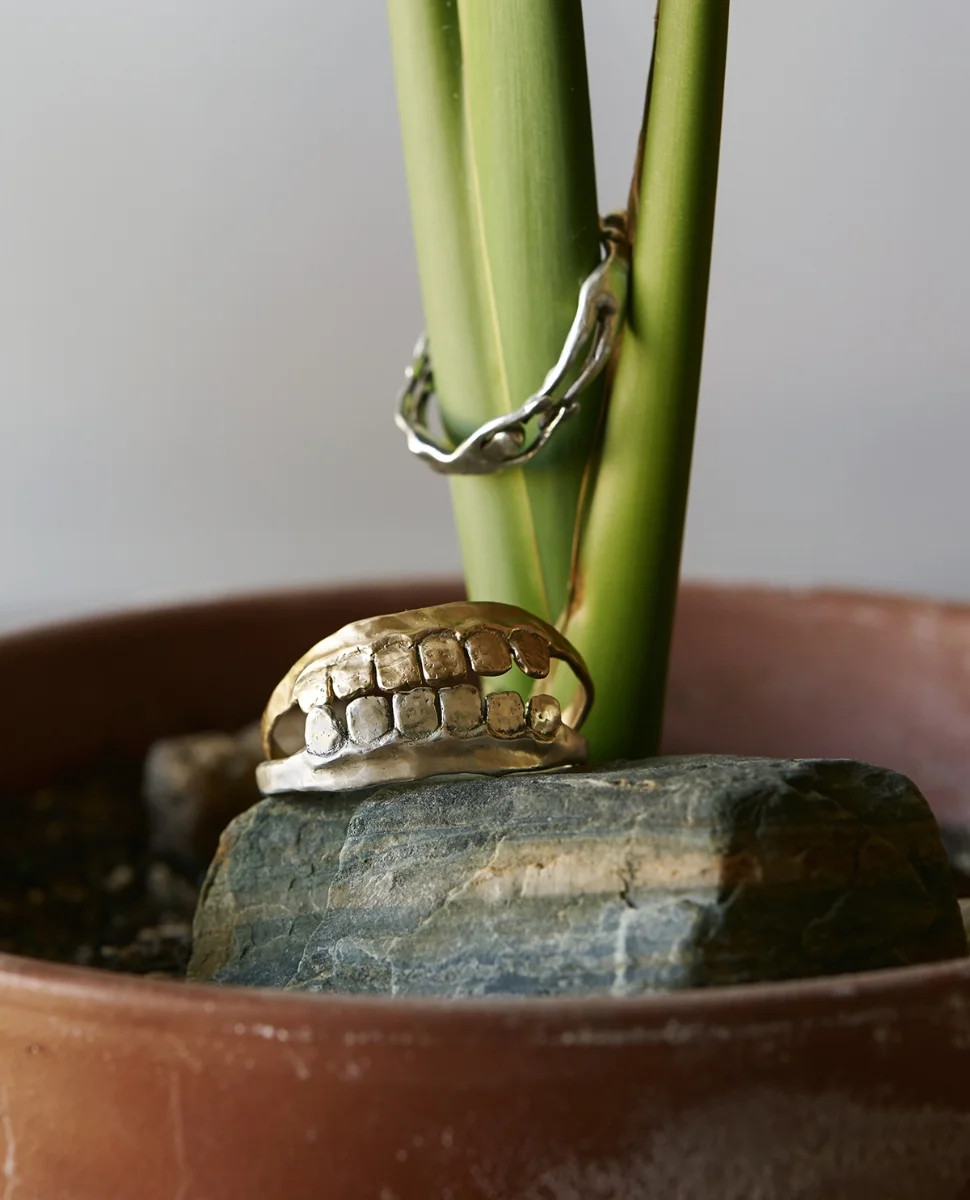
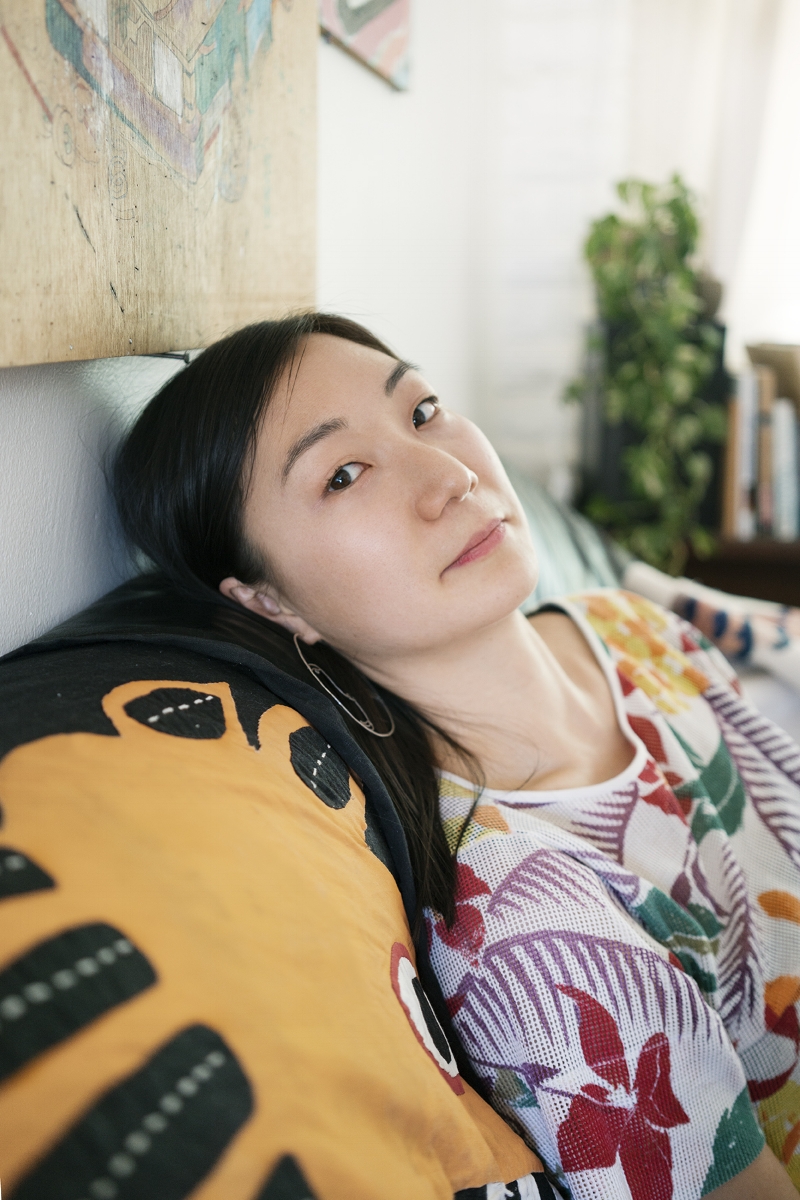
Yu Yu Shiratori is an artist living in Tucson. Using metal work and embroidery, she manifests her perspective of the universe, from galaxies to the human body.
On a white hot day, I sit at her kitchen table. She offers me water and a mesquite chocolate bar to snack on. She mentions, “I don’t trust anyone that doesn’t like chocolate. Or plants for that matter.” We talk about her work and life as she takes me through her home, showing me her studio and process, her universe. I photograph her as she goes through her day. It’s calm and purposeful with 90’s punk playing softly in the background. Later as I get ready to head home, she plucks some grapefruits from her yard and offers them to me for my journey back to Phoenix. I notice 3 pink flamingos in her yard, and comment on them. “My goal is to have a front yard full of pink plastic flamingos someday.” Leaving her house, I’m reminded that we all have magic in us.
TELL US ABOUT YOURSELF?
I’m a multi-medium artist residing in Tucson, Arizona. My work is inspired from earth to the edges of the universe.


WHY DO YOU DO WHAT YOU DO?
I create because it makes life fun. When I run into someone wearing my work (jewelry), it’s so inspiring. It’s like we’re already friends. Creating encourages me to question reality and social norms. It’s building the universe I want to live in.

WHAT BENEFIT DOES ART PROVIDE TO SOCIETY?
Art provides a different perspective and different lifestyle. It’s a gateway to engage with the world more intimately and to see things with a different lens.
WHAT'S YOUR ADVICE TO OTHERS CHASING THEIR DREAMS?
“Nana karoki yaoki” is a Japanese proverb my father would often recite – fall seven times, get up eight. Everyone falls, we all trip up in different ways, but ultimately how we get up and proceed is what matters. It’s uncomfortable and embarrassing, but builds a stronger foundation of what you want. Life doesn’t last forever – neither do the bad days – so enjoy it all while you still can. Put in the hours to make your dream happen.

WHAT IS YOUR BIGGEST INSPIRATION?
My biggest inspiration, in my work and life philosophy, is the fact that we even exist.


WHEN YOU THINK OF HOME, WHAT COMES TO MIND?
It’s what you cherish the most. Home to me is friends and family occupying my heart space.


Photo Business Building Basics

Photography is one of the most accessible mediums to this day. Digital cameras and photo editing software are more affordable now than ever. There are tons of tutorials and workshops on the internet for practically any technique you could imagine. Seldomly do we think about the business aspect of photography when jumping in for the first time. To be fair, a lot of people getting into photography never have the intent to turn it into a business. For some, it starts as a hobby, then slowly evolves into a company; others have a clear intention of making photography their career.
Whether it's intentional or not, the way you do business as a photographer has a significant impact on our industry as a whole. In this article, we'll cover some basic things you should consider when developing your business model.
Pricing
Before you set your photography prices, you need first to understand your operating cost or the cost of providing your services to clients. The cost of providing any service typically falls into one of three categories; materials, overhead and labor cost.
Materials are the cost of goods used in providing your photography services. Photo or video equipment, computer hardware or software are examples of things necessary to create an image and are considered material cost.
Labor cost includes anyone you hire to provide a service. Photo assistant, Digital Tech or Retoucher are all examples of people you may need to hire and the wages you pay them are part of labor cost. Not all jobs will require a crew but typically the more significant the job, the higher the chances are of you needing hired help.
Overhead cost is the indirect cost to your business in providing services to your customers. Examples include studio/office rent, advertising, insurance, taxes, depreciation, office supplies, utilities, and mileage.
Once these things are determined, you will have a base amount of what it takes to run your business. At that point, you will need to factor in a realistic living salary and perform a markup to ensure you're making a profit for your business and also to compensate yourself. The National Press Photographers Association (NPPA) has an excellent cost of doing business calculator that can help calculate these things for you, all you do is plug in the numbers.
Invoice Basics
Invoices should always look professional and be easy to understand. The essential things you should include on every invoice is your contact information and mailing address, itemized breakdown of charges and your terms and conditions of doing business. The breakdown of costs is typically arranged as your professional fees first then production expenses after. Examples of professional fees are the photographer, creative, session, and usage fees. Examples of production expenses include crew member rates, gear rental or studio fees. A good habit to start is to create an invoice for every client, even for charitable or trade jobs and be descriptive as possible in explaining the details of the project. Programs such as Blinkbid, HoneyBook or Sprout Studio are great for keeping invoices organized and professional looking. A Photo Editor also does a beautiful job of breaking down real-world estimates.
Image Usage and Licensing
As a photographer, you own the rights to the images you create. A license is an agreement between you and the client as to how the image will be used (usage rights). When creating an image license for commercial use, it's imperative to have a clear understanding of what the intended use will be. Will the image be used for print (flyers, magazines, billboard) or web only? How long does the client plan to use the image? Will the image be used locally or internationally? How many photos does the client want to license? Is the client a small local retailer or a Fortune 500 company? These are all things you need to know when building and pricing your license. There is an excellent article on the ASMP website on how to draft a license and fstoppers has a great write up on how to price a license.
This article isn't intended to cover every business aspect; it's meant to provide you with some foundational knowledge to build upon and provide you with some excellent resources to help you along the way. The goal should be for you to optimize your business model as you become more experienced in the industry. Keep learning and growing. Cheers!


Around the Blok. Vol. 7 - Michael Lanier
Michael Lanier is the founder of Pueblo, an indoor plant shop in the historic Garfield neighborhood in downtown Phoenix. Along with his partner and co-owner, Coby Bruckner, Michael has created a vibrant oasis in our desert city. The space they have curated at Pueblo is one of life and acceptance and hope. The fostering of life with pruning, watering, moving and observing. Acceptance that a deep breath and a quiet moment amongst plants is exactly what your soul needs. And ultimately, hope that things will not only survive, but thrive. Michael brings this positivity to his neighborhood and beyond, and we are so honored to chat with Michael for Around The Blok.

TELL US ABOUT YOURSELF?
My name is Michael, I’m an Arizona Native and a placemaker. I’m an outgoing introvert and believer in this city and her future, a purveyor of plants and a naturalist at heart. I look at the world with an optimistic realism and will do my best to make my time on earth as productive and joyous as possible, planting trees and providing (literal) shade as I do it.


As you walk into Pueblo, you’re greeted by their often sleepy, good vibes mascot, a boxer named Bennie. She even comes with her own accolades, being named “best boutique pet” by Phoenix Magazine.
WHY DO YOU DO WHAT YOU DO?
I do what I do because I firmly believe in a positive impact. Humans have an incredible knack for destroying the past, and I want to do my absolute best to ensure that whenever I am done, I left a positive impact on as many people as I could in the ways that I can–and for me that means enabling people to fill their lives with just enough knowledge that they feel a little better off and more connected to the living things that can’t talk back.


WHAT BENEFIT DOES ART PROVIDE TO SOCIETY?
Art is so hard to define. Art is music, and movement. It’s color and shape and form and anything that inspires even a slight chill down your spine, or a tingle in your back. Art moves you, and inspires you to want to do that for others. Art helps you notice a detail that’s always been in plain sight. Art is human, and today it seems more important than ever to just feel human.


WHAT'S YOUR ADVICE TO OTHERS CHASING THEIR DREAM?
It’s so easy to convince yourself that a dream is something you’ll do when you have time, but waiting until you feel ready tends to put a dream off for life. Make sure there is passion in it, and make sure that you can sustain yourself while you chase it. There have been so many times that I get lost in the details of what I do that I forget that the bigger picture is just to enjoy what I do. Don’t get lost in the small, overwhelming obstacles.


WHAT'S YOUR BIGGEST INSPIRATION AND WHY?
My biggest inspiration would have to be other artists, entrepreneurs and creatives. Friends, local and far. People who are doing their best to make a go of their own desires and dreams.

WHEN YOU THINK OF HOME, WHAT COMES TO MIND?
Home is Here. I’ve always assumed home was just where I was at the time, but I always end up coming home to Phoenix. It’s always a little dusty, always a little polluted, always a little washed out but no matter what it is, it’s always home, and I always want to improve it and watch it grow and mature in any way it can.


Lens Filter Benefits

Lens filters still serve many different purposes in this digital age and are widely used in photography. They can offer protection, reduce reflection, alter light and enhance colors. In this article, we'll talk about the filters we tend to use the most.
What Are Lens Filters
Lens filters are transparent or translucent glass, plastic, resin, polyester and polycarbonate material that attaches to the front of a lens. They come in circular, square and rectangular types. Circular (screw-in) filters connect directly to the front of the lens, square and rectangular (drop-in) filters utilize an adapter that attaches to the lens.
Lens Filter Types
- UV/Clear/Haze Filter
In the past, these filters were used to block UV light from hitting the film or camera sensor. But, with the advancement of digital photography, all DSLR cameras presently have built-in UV filters. Now, the primary purpose of the UV filter is to protect the front element of a lens from dust and scratches. Be sure to purchase a good quality UV Filter as lower quality versions could reduce image quality, increase reflections and flares in your images.
- Circular Polarizing (CPL) Filter
The primary purposes of the CPL filter are to reduce reflections, enhance colors, increase contrast and reduce haze. This filter is especially good if you want to darken the sky or lessen the intensity of reflective surfaces like water or windows. The effect and intensity of this filter changes dependent upon one's angle to the sun. Also, there is usually a loss of 1-2 stops of light when using this filter so be mindful of your camera settings when using this.
Neutral Density (ND) Filter
ND filters reduce the amount of light entering the camera lens thus allowing you to decrease shutter speed and increase exposure time. These filters are useful when you want to shoot with a wider aperture on a bright day or shoot with a slower shutter speed with moving water to create that "foggy" effect. They also allow you to shoot with wider apertures in studio photography. ND filters also come in hard
These three options are popular amongst our photography community but they are not the only options available. Other filter types include Hard-Edge Graduated Neutral Density (GND) Filter, Soft-Edge Graduated Neutral Density (GND) Filter, Reverse Graduated Neutral Density (GND) Filter, Color/Warming/Cooling Filter, and Special Effects Filter. These all have their intended purposes and we encourage you to research them. Happy shooting!

THREE Reasons Why You Need a Wacom Tablet.

Here we go ladies and gentlemen, the great debate! I've had the privilege of meeting so many amazing photographers coming through the doors of Blok and I constantly leave with tons of great conversations, but one particular conversation seems to happen more often than none... *Shakespeare voice* To tablet or not to tablet, THAT is the question! All jokes aside though, this is a very important part of your workflow that you should consider if you haven't already done so.
I've met photographers who prefer to retouch with a mouse and others who SWEAR by the tablet. I had a friend of mine say verbatim, "If the tablet didn't exist, I wouldn't be a photographer". His seriousness in which he stated this information made me do my homework because at the time I'd only been shooting for a couple months and my idea of retouching was simply moving sliders (We all have to start somewhere #amirite) left and right.
Two years later and hours upon hours of retouching, my verdict here is simple -- Wacom tablets are an essential part of retouching and should be owned by anyone who is serious about their work. We all know photography can be expensive at times, from camera bodies, lenses, lighting, and overall accessories it takes to complete the task at hand. However, this item is on the more cost-effective side of photography. Today, I'd like to give you three reasons why you need a Wacom tablet!
1.) Precision.
Using a mouse can be very difficult if you're looking to make precise changes to an image because it's sensitive to the slightest move causing you to potentially make an error. Working with a mouse can be very tedious because of the flatness of your wrist and you'll need to drag along to make quick changes to your image. Using a tablet will streamline the entire editing process because these tablets come with a pen and they are generally much easier to use since they are much comfortable in your hand.
2.) Time Saving.
When using a mouse you'll often need to drag and click commands, which does require time when retouching your photo. The Wacom pen will eliminate the dragging process each time and many of the commands can be controlled through the actual pen and tablet itself. Since the Wacom tablet allows you to point at any point of the screen very fast, you can retouch comfortably and faster as well.
3.) Your Wrist.
Compared to the mouse, using a tablet is similar to using a pen for writing or drawing. Your hand is more relaxed when you use it. While the mouse is used in one hand position that put some strain on it, and can get your hand cramped if used for a long time.The strain on your hand, and using it for editing can cause you some issues like RSI & tennis elbow. If you must use the mouse, make sure you take regular breaks while editing.
Here's a Wacom tablet we'd recommend! Cheers!
Wacom Intuos Art Pen & Touch Small Tablet.($99)

Celebrating International Women’s Day.
To celebrate International Women’s Day 2018, we here at Blok would like to honor and thank a few female photographers for constantly inspiring us with their amazing creativity, dedication, and vision!

Annie Leibovitz.

Mary Ellen Mark.

Diane Arbus.

Dorothea Lange.

Vivian Maier.

AROUND THE BLOK. VOL. 6 - HILARY KATHLEEN
Hilary Kathleen is a freelance analog 35mm film photographer currently based in the southwest where she resides with her six year old son. Themes found in her work includes connection with mother, feminine empowerment, youth empowerment, anthropogenic impact on the environment and exploration of emotion through variance in light and process of creative self-expression. Today, we are extremely excited to sit down with Hilary for Around The Blok!
TELL US ABOUT YOURSELF?
I consider myself to be more of an artist as my main objective is to create and express but my primary form of expression is through 35mm film photos, mostly of my son, my friends and inspiring people and places I am lucky enough to have a loving moment with. I am profoundly a now person, nature is my sanctuary, I value relationships and genuine connection, I feel weighed down by material things, I dance/sing/write/soak on the daily, I am highly sensitive and emotional, I wake and meditate, tacos are my favorite food, pink and blue are my favorite color, I love my mama, I am social yet deeply introverted, I am excited to try new things and ok with being not so great at them, I am happiest road tripping without expectations or a set plan, my favorite thing in the world is cuddling with my son and watching him sleep, I get my jollies discussing topics of existential nature and I have a tattoo of a french bulldog on a surfboard riding a wave.

WHY DO YOU DO WHAT YOU DO?
I take photos because I absolutely love it with my whole heart beyond what words can accurately describe and because it helps me feel a sense of purpose. Photo has helped me through the darkest of times as a healthy creative outlet and as a channel to process my emotions. It has given me a level of meaning and connection in life that goes beyond what I am capable of on my own. I started to really get into photo at a time in my life when I had slowly been depreciating in self-worth after years and years of trying to be something I wasn’t. I had been married for a while and was trying to be what my husband thought I should be and was severely depressed, completely numb, lifeless and a bit hopeless. I had had an interest in taking photos since high school and took a few classes in college but what I learned only frustrated me and didn’t seem useful for where I was at. Around that same time, a very critical and angry person in my life told me I would never be a photographer because I wasn’t brave enough, which crushed me and completely demolished any sense of confidence I had as a mere nineteen year old. It wasn’t until I was twenty-seven and my son was almost a year old that I mustered up the courage to give photography another shot. I realized I was losing out on an opportunity to document his childhood and to preserve memories if I didn’t get over my fears and insecurities, buck up and try again. Since the moment he was born I have looked at my son in awe of how incredibly beautiful and special he is above and beyond my capacity to imagine what he would be so taking photos of him is an experience of comfort and pure euphoric delight. Because we share a love that is so pure, the love of a child and for a child, It brings out the best in both of us and is a standard that I have learned so much about cultivating for myself and in my close relationships. Over the years I’ve used this standard as a goal with everything I photograph, and a direction for what I chose to photograph, and although it is infinite work it still feels better to get closer to that goal bit by bit. As a result of this work I have been lifted out of the fog of depression and now live with a more pure, euphoric delight for life and have done what I love most with who I love most to thank for it.

WHAT BENEFIT DOES ART PROVIDE TO SOCIETY?
I believe art to be the healthiest form of release and emotional processing as I have experienced it as such and have benefited greatly from art that has been shared by others as a source of encouragement, connection and inspiration. If I have personally experienced these positive aspects of art than I’m sure society is benefiting in this way as a whole as well. Before I practiced art as much as I do now I also experienced and can attest to the negative effects of pent up emotion that after long periods of suppressing would erupt in violent and chaotic frustration and anger after being triggered by the smallest thing. These eruptions would scare me as I felt I had no control at once I got into a tantrum and I didn’t know what I was capable of. I once smashed a swiffer to pieces yelling and screaming out of rage, pieces of plastic flying through the air like shrapnel, my then husband and son watched in disbelief and fear from the other room. I knew was out of hand at that point and that I needed to do something about this problem that was so obviously unhealthy and affecting those around me. When we practice art we provide a channel for these emotions to flow so they aren’t pent up. What we create with the flow of these emotions can guide our decisions and help us work on ourselves if we so choose. When art is shared I think it helps others relate to these emotions and process visually as well so even if you’re not an artist you can benefit. Obviously stated I think society functions better if it’s contributors aren’t throwing unpredictable fits of violent rage and feel connected to each other through compassion of understanding what it is to feel human.

WHAT’S YOUR ADVICE TO OTHERS CHASING THEIR DREAMS?
My advice to others chasing their dreams would be to listen to yourself. I have a hard time with the concept of advice because I truly believe that inspiration and guidance are meant to be found in whatever form is perfect for the person seeking, and that is for them to determine for themselves. There are infinite ways to get to where you want to go and based off of our genetic makeup, out history, our skills, our weaknesses, components that no one else will truly understand ever, it seems insane to expect everyone to get there the same way. Only you can know which way you need to go for yourself and only you will be held accountable for your choices at the end of the day. No one else cares about you getting there the way that you do, which gives you the freedom to do what you need to do. What I learned from the experience of being depressed for so long was that my depression was a direct result of my resistance to being who I really am, my resistance to make choices for myself and to grow from those experiences.

WHAT IS YOUR BIGGEST INSPIRATION AND WHY?
My biggest inspiration I’m stuck on, ack, there are so many things that inspire me and are ever changing but I suppose I could pinpoint healing is the total summation. I am inspired by what interests me and fascinates me, gets me out of my comfort zone, and the process of healing from trauma and unhealthy habits really gets me excited. Connection with nature, connection with each other, unconditional love, empowerment and creativity are contributing components to my work right now that flow positively.

WHEN YOU THINK OF HOME, WHAT COMES TO MIND?
When I think of home I think of the freedom to be myself exactly as I am. Comfort in a feeling of unconditional love and acceptance.

You can follow Hilary Kathleen on INSTAGRAM.